The WoMentoring Project

From time to time I’ve thought how wonderful it would be to have a writing mentor. I know other writers who have been mentored and found it enormously helpful. Then I’ve looked at the cost and dismissed the idea. In January this year I was involved in a twitter conversation with Kerry Hudson and a few others and Kerry suggested there should maybe be a peer mentoring site for women writers as a way of supporting them, and them paying it forwards and so on. What would be the tweeting equivalent of thinking aloud? Well, she was doing that, and she ended by saying she was totally going to do it.

Because Kerry is amazing, she has launched The WoMentoring Project today, not even three months later. Here are some details:

About?

The WoMentoring Project exists to offer free mentoring by professional literary women to up and coming female writers who would otherwise find it difficult to access similar opportunities.

The mission of The WoMentoring Project is simply to introduce successful literary women to other women writers at the beginning of their careers who would benefit from some insight, knowledge and support. The hope is that we’ll see new, talented and diverse female voices emerging as a result of time and guidance received from our mentors.

Each mentor selects their own mentee and it is at their discretion how little or much time they donate. We have no budget, it’s a completely free initiative and every aspect of the project – from the project management to the website design to the PR support – is being volunteered by a collective of female literary professionals. Quite simply this is about exceptional women supporting exceptional women. Welcome to The WoMentoring Project.

Why do we need it?

Like many great (and not so great) ideas The WoMentoring Project came about via a conversation on Twitter. While discussing the current lack of peer mentoring and the prohibitive expense for many of professional mentoring we asked our followers – largely writers, editors and agents – who would be willing to donate a few hours of their time to another woman just starting out. The response was overwhelming – within two hours we had over sixty volunteer mentors.

Our mentors are all professional writers, editors or literary agents. Many of us received unofficial or official mentoring ourselves which helped us get ahead and the emphasis is on ‘paying forward’ some of the support we’ve been given.

In an industry where male writers are still reviewed and paid more than their female counterparts in the UK, we wanted to balance the playing field. Likewise, we want to give female voices that would otherwise find it hard to be heard, a greater opportunity of reaching their true potential.

Applications

In an ideal world we would offer a mentor to every writer who needed and wanted one. Of course this isn’t possible so instead we’ve tried to ensure the application process is accessible while also ensuring that out mentors have enough information with which to make their selection.

Applicant mentees will submit a 1000 word writing sample and a 500 word statement about why they would benefit from free mentoring. All applications will be in application to a specific mentor and mentees can only apply for one mentor at a time.

Why our mentors are getting involved

The reason I’m doing this is simple: mentoring can mean the difference between getting published and getting lost in the crowd. It can help a good writer become a brilliant one. But till now, opportunities for low-income writers to be mentored were few and far between. This initiative redresses the balance; I’m utterly delighted to be part of the project.

Shelley Harris, author of Jubilee

I have only achieved the success I have with the help of others, and now I am keen to pass on that help. I particularly want to reach out to those who don’t have the privileges of wealth, status or existing contacts, but who have so much to gain and to give.

Marie Phillips, author Gods Behaving Badly

I’m so pleased to be involved in the WoMentoring Project, and I can’t wait to meet my mentee. I know from my own authors how isolating an experience writing can often be, especially when you’re just starting out, and so I really wanted to be involved. I hope that knowing that there is someone on your side in those early days will give writers courage and confidence in their work.

Alison Hennessy, Senior Editor at Harvill Secker

The WoMentoring project is the kind of opportunity I would have relished when writing my first novel. It’s founded in the spirit of paying it forward, and I’ll take real pride in sharing whatever experience I’ve gained with a mentee. I’ve benefited from the advice and encouragement of some truly inspirational writers, the right voice cheering you on can make all the difference when you’re in your solitary writing bubble. The formality of the mentoring arrangement also gives a sense of responsibility and focus – something that’s invaluable when you’re lost in the sprawl of a work-in-progress – and it’s beneficial to mentors too.

Amylia Hall, author of The Book of Summers

My career as an editor has been immeasurably enriched by working with inspiring women writers, yet the world of publishing would have been inaccessible to me without the time and support I was given when first starting out.  The WoMentoring Project is a wonderful, necessary thing and I’m very proud to be taking part in it.

It all sounds bloody marvelous. If you are interested in applying to be a mentee (is that the word? It looks really strange) then head over to the site and check out all the ace people who have volunteered to mentor. And three cheers for Kerry please.

Hip hip…

SMASH LITS WITH NIK PERRING

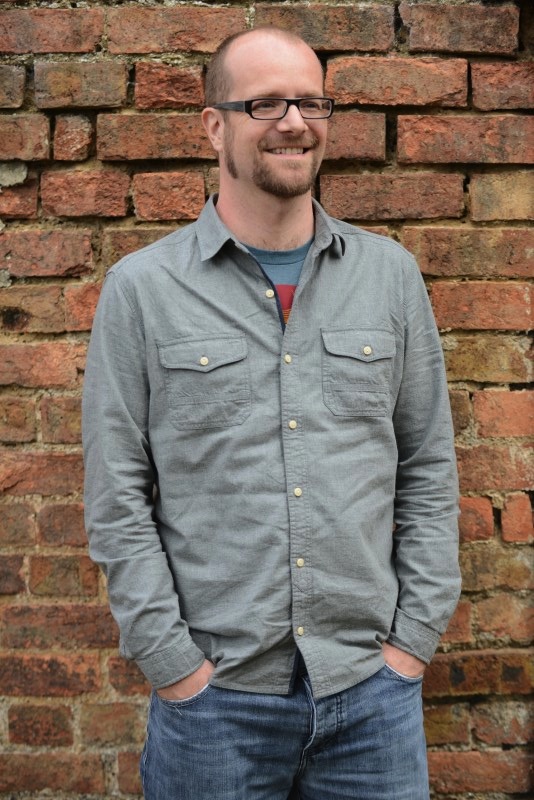
This is Nik Perring –

NikPerringWORDS2

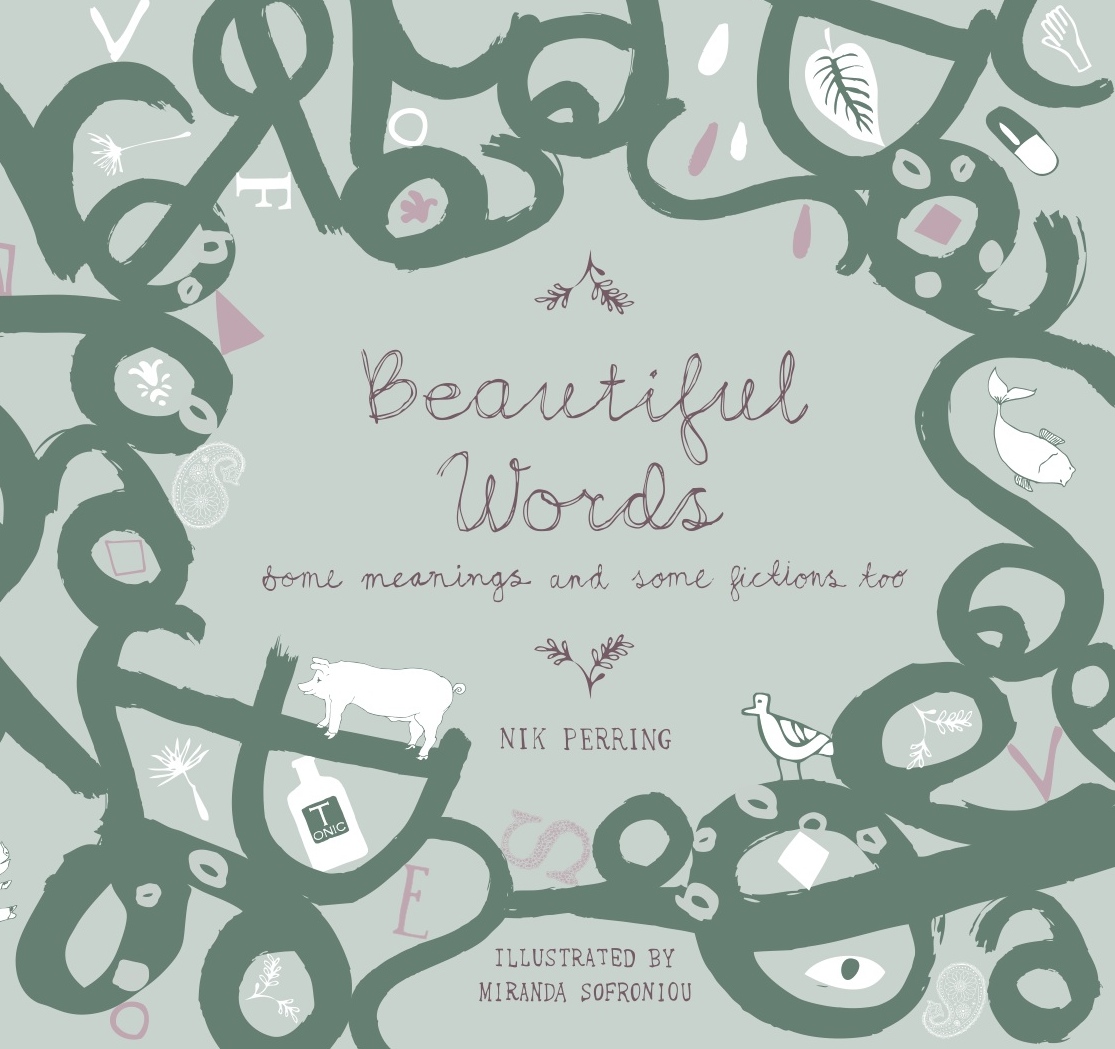
and this is his new book –

Cover 180x180-2


Published by Roastbooks it’s gorgeous and different. It looks like a children’s picture alphabet book, except A is not for Apple, it’s for Appalachian, and F is not for Frog, but Fuck. Each word has been collected by Nik because he finds it beautiful in some way. Through his descriptions of the words we glimpse a relationship between Alexander and Lucy. It’s really a lovely book to give someone (or to treat yourself to).

Rightio, it’s time for the questions:

1) Have you ever seen a ghost?

Actually, I think I have. He was in my bedroom one night, looking through my drawers. He was slim and middle-aged – greying hair and in a baggy red sweater. I looked at him, he looked at me, and then he stood, walked through the bottom of my bed and out through the wall. He ignored me when I said, ‘Hello,’ and that’s just rude.

2) Do you know anyone named Tarquin?

Sadly not. It is a fine name.

3) Do you believe in life after love? 

I think I have to.

4) What are the 3 ugliest words?

Prejudice, because of what it means. Religion, because of what it does. And ugly, because of how it makes people feel.

5) Who is your favourite Neighbours character?

I don’t think I’ve seen an episode since I was in my early teens. I always liked Beth though.

6) Where do you go in your dreams?

Everywhere. Nowhere’s off limits.

7)  What is your favourite word?

Normally I’d have said something like ‘love’ or ‘trust’ but I’m going to go with one that’s in the book, and that is ‘ineludible’. Lovely, isn’t it?

IMG_3360

8) How much money did you spend yesterday?

Yesterday, I bought:

Ginger root – £1.

1 x packet of blue Pall Mall – £6.25.

1 x bottle of Lucozade (for my mum, she wasn’t feeling well) £1.99

And about £15’s worth of beer in the pub. (It was Beautiful Words’ publication day so I celebrated a little.)

TOTAL £24.24

9) Do flowers scream when you pick them?

Of course they do. Roald Dahl says so.

10) Can you make up a poem about tonic?

She was drinking gin and tonic

while reading a rather long comic

when the comic was done

she fell on her bum

and now her problem is chronic

(That’s brilliant!)

11) Do you have a favourite pen?

I have two Pelikan M200s which I’ve used for years. All my first drafts are written longhand so a good pen, so my wrist doesn’t get knackered, is important. It also, particularly pretentiously, makes me feel like I’m getting that little bit closer to the words. Practically, it’s good because whatever I’ve written gets a half-edit while I’m typing it up.

12) Are you more likely to make a souffle, do the ironing, or clean the toilet?

I do like to cook, but I’ve never done a souffle. Cleaning the bathroom is a necessary evil. So, ironing it is then.

13) Who is your writer crush?

Anne Sexton. Though there are a few whose stories still make me swoon: Aimee Bender, Michael Kimball, Etkar Keret, Marie-Helene Bertino, Lorrie Moore, Angela Readman. And Sara Crowley, of course.

(Smooth!)

14) Have you ever had a nickname? (Nik name haha) What?

Ha! Not really. I was Pez for a little while in school. And Cola-Bottle (as in the sweets) because I was thin and dark. Nik works much, much better, don’t you think?

15) Bacon VS Tofu. Who wins?

IMG_4947

I’m a reluctant non-veggie (is that a bit like conscious uncoupling??) so tofu.

16) Would you rather be a bee or a wasp?

A bee, without question. Wasps are evil.

17) You are wallpaper, what is your pattern?

Whatever The Yellow Wallpaper was. (If you’ve not read it, you should. It’s wonderful.)

(I have read it. That’s a really interesting answer.)

18) How do you organise your bookshelves?

Ha ha ha ha ha!

19) Up or down?

Down, looking up.

20) What is your favourite cheese?

Actually, I can’t eat cheese because it gives me migraines (actually one of the reasons I’m not a fully committed veggie). Alexander likes cheese in Beautiful Words and, because it’s a pretty word, his favourite is Roulade. (That is a cheese, isn’t it?)


Thanks, Nik. I wish you lots of success with Beautiful Words. If anyone wants to know more about Nik here is his blurby stuff:

Nik Perring is a short story writer and author from the UK. His stories have been published in many fine places both in the UK and abroad, in print and online. They’ve been used on High School distance learning courses in the US, printed on fliers, and recorded for radio. Nik is the author of the children’s book, I Met a Roman Last Night, What Did You Do? (EPS, 2006); the short story collection, Not So Perfect (Roastbooks 2010); and he’s the co-author of Freaks! (The Friday Project/HarperCollins, 2012). His online home is www.nikperring.com and he’s on Twitter as @nikperring


Smash Lits with Dan Powell

So, the first person to face my Smash Lits questions is Dan Powell.

Image

His debut collection of short fiction – “Looking Out Of Broken Windows” – has just been published by Salt. I got to read it before it was published. (Yeah, I’m showing off.) Dan was entering it into the Scott Prize and I told him “It’s a winner for sure” and “I fully expect you to win this competition”. I have NEVER said that to anyone else. I mean, what a thing to say! But, that’s how certain I was. That’s how good his stories are. All of them! He’s consistently excellent. Fanfare please, Salt loved it so much they published it and I think you should probably buy it. Or you can enter a competition to win a copy by commenting here or on any of the other LOoBW blog tour posts appearing across the internet this March, or you can “like” the Looking Out of Broken Windows Facebook page. All the names will be put in a hat for the draw which takes place on April 6th. Anyway, enough blurby stuff, on with the questions.

1) How do you organise your bookshelves?

I keep all my short fiction collections together on a series of shelves, but beyond that it is all chaos. I buy too many books (just ask my wife) and now there are stacks on top of stacks. I may have to start double layering each shelf but I am currently resisting that. It feels wrong.

2) What is your favourite biscuit?

Custard Cream. A design classic. The Helvetica of biscuits. They’re everywhere.

3) You are wallpaper. What is your pattern?

All of my electronic devices have the same digital wallpaper. Clouds against a blue sky. Very calming. So that. Walls and ceiling, please.

Image

4) What was your favourite book as a child?

Treasure Island. It’s still in my top ten. Perfect boys’ own adventure. Funny and thrilling and at times very, very dark.

5) Your writing is music, what style is it?

Instrumental mood music. Somewhere between Lowercase Noises and Explosions in the Sky.

6) Are you in it for the money, fame and glory? Or?

I’m in it for the words. Just the words.

7) You have to swap places with one other writer for a week. Who and why?

I’d swap places with Jonathan Franzen and use his computer to set him up an official verified Twitter account. I’d tweet a few for him, then sit back to watch the literary back room of the internet explode.

8) What makes the wind blow?

Those little sighs that toddler’s give when they are sleeping. That’s the starting point. It’s a butterfly flapping its wings thing.

9) Do you have a favourite pen?

Yes. My fancy-dan Fisher Space Explorer Pen. It writes upside down and in space. Just in case I’m ever upside down or in space or upside down in space. Can you be upside down in space?
(I am so jealous. I really want one of those. I asked for one for Christmas but nobody knew what I meant apparently.)

10) Do you believe human beings can spontaneously combust?

Probably not. But some probably should.

11) Have you ever written an angry letter/email to a magazine or newspaper?

No, but my first ever published writing was a letter in the UK Transformers comic. I seem to remember winning twenty pounds as the writer of that week’s star letter. That’s better than you get for most short stories these days.

12) Who is your favourite Neighbours character?

Not seen this since the early nineties. My sister watched this and Home and Away avidly. I caught glimpses up until I left for Uni. I’ll say Mike as he grew up to be Guy Pearce which was kind of unexpected.

13) Would you rather be a bee or a wasp?

Bee. No one likes a wasp.

14) If your life story was made into a book, what would the title be?

Looking Out of Broken Glasses or No More Books.

15) What did you do last Saturday night?

Read some Karl Ove Knausgaard and watched Wes Anderson’s first movie, Bottle Rocket, with my wife. Not at the same time.

16) Do you have a writer crush?

I have a bit of a thing for Amy Hempel. She’s broken my heart many times and keeps doing so. I keep coming back for more.

17) Bacon VS Tofu – who wins and why?

Image
Bacon. Streaks ahead of Tofu.
(Streaks. Haha.)

18) Have you ever seen a ghost?

No. I am planning on being one though.

19) Are you Looking Out of Broken Windows? What can you see from your window?

I’m on a train as write this so I’m looking out of a wide, dirty window. I can see the suburbs of Nottingham. Uniform houses all in rows. Boxes with triangles on top. Punctuated every now and again by an industrial estate.

20) Can you make up a poem about broken windows?

The window broke
All by itself
It popped and snapped
It had no help
I tried to put it back in place
Tried but could only fail.

Is that a poem?

Oh yes, I think so. Very profound.

Thanks for answering my questions, and I wish you many sales and much success. I’d also like to say thank you for all the work you put into supporting other writers.


Smash Lits

I enjoy reading writer blogs and interviews, and I like to review and interview other writers here. There are, however, a LOT of blog tours and review sites. The challenge is to keep things fresh. I was wondering how I could mix things up a bit and remembered that my very favourite interviews were always the Smash Hits biscuit tin ones. It was fun, it told the reader something daft and unexpected, it didn’t take itself seriously. So, I am introducing Smash Lits – my own version with an occasional literary twist.

I have a batch of questions good to go, and a line up of cool writers who have agreed to take part.

If you can think of any questions you might like to see added to the mix please do comment. If you are a writer who fancies giving it a whirl let me know.

My first interview is with Dan Powell and will be up here next Thursday 27th.

Writer Twunts

Writer Twunts ask “What have you published?” meaning “Is your novel on sale in bookshops?” If your novel is not on sale in bookshops Writer Twunts assume you are not a Writer. As you are not a Writer you are irrelevant to them.

Writer Twunts email the bookshop you work in and ask why you aren’t stocking their novel. They come into the shop and ask the same. They DEMAND you stock it. If you have a social media profile they will add you on Facebook and Twitter. They will only ever communicate with you to ask why their book wasn’t in the shop when they came in.

Writer Twunts will actually send emails that say “I don’t think you realise who you are dealing with.”

Writer Twunts like you to organise events for them. They will have a long list of things that Have To Happen at the event. They will act as if they are famous. They are not.

(Famous Writers tend to be polite. Famous Writers usually say thank you for your support. Some send chocolates or cards or copies of their new novels to the bookshop. Writer Twunts send in nothing except their ego.)

Writer Twunts will send passive aggressive tweets saying “Thanks for stocking my book. Why isn’t it front of store though? Could you fix please?”

Writer Twunts will complain that you only have 3 copies of their book in stock.

Writer Twunts imagine that if their book is in the bookshop, then people will buy it. Writer Twunts will blame you for not prominently displaying it when nobody buys it.

Writer Twunts will loudly announce that they are a writer as if you have never met one before. As if you aren’t friends with many, many wonderful writers, none of whom are twunts. They will expect you to be dazzled.

Writer Twunts think it’s ok to fill your twitter/facebook feed with endless self promotion.

Writer Twunts will ignore you for most of the time. When they want a review, or an event, or their latest book in store, they will contact you, without embarrassment, and expect you to be happy to help them.

Feel free to add your own experiences of Writer Twuntness in the comments.

We Need New Names by NoViolet Bulawayo

Of course we should never judge a book by its cover, and yet this cover is so bright and attractive I was drawn to it in a way I wouldn’t have been if it had been one of those beige books. I’m glad to say the novel inside is as vibrant and fresh as the cover suggests.

This is the story of Darling, ten years old and living in Paradise, a place which is anything but. She has friends: Bastard, Chipo, Godknows, Sbho and Stino. They play together, hunt for guavas in the richer area of Budapest, and talk about escaping their shanty town. Always hungry, no longer at school, with the adults around them struggling under a regime that has robbed them of  money, jobs and homes, Darling and her friends nonetheless fizz with energy and fun. People have to leave Paradise to earn money, Darling’s dad included, although he sends nothing back. Then one day he returns home to die. Chipo is pregnant at 11, the result of rape. All the while the sun burns down and the hunger gnaws. Bulawayo is brilliant at describing this and the necessary bravado these children employ.

“I used to be very afraid of graveyards and death and such things, but not anymore. There is just no sense being afraid when you live so near the graves; it would be like the tongue fearing the teeth.”

Darling tells her friends her Aunt will be taking her to America, but when Aunt Fostalina actually does, everything reverses. Sometimes it feels a little obvious – Darling is surrounded by food, but the abundance of food means that people obsess about what to eat and over exercise or starve themselves to be thin enough. Snow falls and Darling is colder than she ever imagined possible and longs for the warmth of Paradise. Darling can never return to Zimbabwe because she has no official papers and becomes consumed by a yearning for home and an insurmountable sense of displacement. She belongs nowhere.

“Because we were not in our country, we could not use our own languages, and so when we spoke our voices came out bruised. When we talked, our tongues thrashed madly in our mouths, staggered like drunken men. Because we were not using our languages we said things we did not mean; what we really wanted to say remained folded inside, trapped.”

Bulawayo highlights how (some) Americans presume Africa is one country and that all parts are the same;

“Oh my God, yes, we’ve seen your country; it’s been on the news.”

Her portrayal of (some) Americans as being obese, porn watching and ignorant is possibly equally unsubtle. What makes all this work so well is the verve of Bulawayo’s language, and the humour that lightens the terrible darkness. The beginning of the novel was originally a short story – “Hitting Budapest” and it propels the reader into another world with wit and speed.

In the last chapter “Writing On The Wall” some of Darling’s original energy reappears, but when she talks to Chipo via Skype, and Chipo lectures her on leaving, it sounded as if perhaps this is the author’s voice, lecturing herself. Darling is an interesting character, I’d love to know what happens to her next, and I’d dare to wish her an almost happy ending, though I’m not sure Bulawayo would think one possible.

Someone Else’s Skin by Sarah Hilary

Sarah Hilary’s Someone Else’s Skin is published on the 27th of this month (by Headline) and it’s a stonkingly good read. I don’t usually read crime fiction, but I do enjoy watching TV detective shows, as does Sarah. (I know this because we have tweeted each other about our love of “Cho time” in The Mentalist, and our admiration for Luther.) Reading S.E.S I was immediately struck by how much like a television drama the novel seemed. I could “see” the story unfold. It has to be made into a TV show, surely?

Marnie Rome and her partner, DS Noah Jake, visit a women’s refuge in the hope of getting one of the women to testify against her brothers. Whilst there, a man is stabbed by his wife in front of several of the residents. As the officers investigate the stabbing, three of the women go missing.

At the same time, Marnie Rome’s backstory is woven in – her parent’s were murdered five years ago, and Rome regularly visits their murderer.

What follows is an intriguing tale where Hilary continually confounds expectations. Rome is allowed weakness, she makes mistakes, gets angry, and has complex emotions. Her relationships with Noah, and victim support worker, Ed Belloc, are well drawn. It’s a novel where nothing is quite as it seems. Hilary is unafraid of exploring darkness and some big issues, but never at the expense of story. It’s all very page-turny, even if I did find some of the violence unpalatable. It’s a well written, pacey, engaging novel, and I really want to know more about Marnie et al and am looking forward to book two. In the meantime, I had a few questions for Sarah which she agreed to answer for me:

Q. You’re an excellent short story writer, how difficult was it to expand into writing novels? Any words of advice for writers hoping to transition from short story writing to novel writing?

A. Thank you, that’s very kind. I enjoy writing short stories but boy, do I find them hard to get right. I think I’m better suited to writing novels; my stories seem to bend towards the shape of a novel more easily. So, in terms of advice, I’d say go with the shape of the story and see where it takes you.

Q. Where did you write? Any routine/ritual etc?

A. I’m very guilty about the fact that I bought a lovely writing desk when I moved house, and haven’t sat there once. I write in cafes. I like the white noise, and the coffee. I make sure I write for at least two hours before I allow myself a break. It’s the only way I can be sure to get it done.

Q. When you started writing did you know you were creating a series?

A. Always. It’s such a gift to be able to spend time with the same characters.

Q. How far ahead have you plotted in terms of story arc?

A. I try to have ideas for the next book along, whenever I’m writing something new. Not plotting, as such, but nuggets.

Q. Have you written book 2 yet?

A. First draft, yes. I’m about to embark on the second draft so wish me luck.

Q. Would you like to see it made into a TV series? And if so, any idea on who would make a good Marnie Rome?

A. That would be amazing, wouldn’t it? A friend suggested Karen Gillan for Marnie, but I’m not sure. I do know that I’d love Ashley Walters to play Noah Jake.

Q. What is your fave tv detective series?

A. Currently? The Bridge. I love Saga and Martin so much it hurts.

Q. Who is your fave tv detective?

A. Saga Norén.

Q. What about crime novels – any favourites?

A. Everything ever written by Fred Vargas. Also, The Collector by John Fowles, and Silence of the Lambs by Thomas Harris.

Q. You write about domestic violence & female genital mutilation – was it always your intention to try to highlight these issues?

A. No. I started out to write a book about secrets, and deceit. The characters I created each had different secrets, and some of those secrets were very dark. But I do want to talk about issues which have been side-lined by society, especially the ones that make us uncomfortable. There’s too much silence born of discomfort, I think. I’d like to make a bit of noise around those issues, because they matter so much.

Q. Did you do much research?

A. Enough to be sure of my facts, but not so much that it strays into non-fiction or gets in the way of the storytelling.

Q. The book is pretty harrowing with some deeply unpleasant violence. How easy was it to switch off and go and cook tea etc?

A. I don’t cook, which helps..! Writing Someone Else’s Skin did stir up a lot of unsettling emotions in me, but I think that’s part of being a writer, isn’t it? Keeping faith with the dark and the light… The chip of ice in our souls, as Graham Greene called it. I’m not very good at switching off; the next story is always percolating in my head. Probably very unhealthy although my editor would approve.

Thank you Sarah. I wish you and Marnie much success.

If you can’t wait to get your hands on Someone Else’s Skin you can preorder here. I’m sure all fans of crime fiction will be delighted to discover such an intriguing new detective.

Who?

Working in a bookshop one quickly becomes used to customers mispronouncing names of authors. Sometimes the name is so far from the original it’s a challenge to identify the correct author without embarrassing the customer. Understandable though – if you don’t hear the name spoken how will you know the pronunciation? (Though I find it hard to believe the guy who asked for something by Shacky Spee Are A had never heard Shakespeare’s name said aloud). It’s more embarrassing for a bookseller to get it wrong, I think. We’re supposed to know, aren’t we? I tend to approach names I’m unsure of with some gusto in the belief that if I say it confidently enough, people won’t challenge me. There are some names I seem to have to say a lot, like Chimamanda Ngozi Adichie, whose enormous popularity means I get asked “Who wrote…” at least once a week, with Adichie being the answer. Writing this I googled “How to pronounce…” and am relieved that it seems I have been doing an ok job of it. Conversely I was surprised when listening to the radio some time last year to hear Don DeLillo pronounced De Li Low and not De Lie Low as I had been saying it. The shame!

I was reminded of this last week when I read a tweet from Chris Power saying  “My god, I’ve been pronouncing Joseph Roth as ‘wrath’, not ‘wrote'”  – yup, me too!

At work my colleague and I discussed more surprising pronunciations.  Did you know that Herman Hesse is apparently pronounced Hesser? That Vikram Seth is Sate? That Robert Louis Stevenson is pronounced Robert Lewis Stevenson? (Incidentally my colleague assures me that Jekyll as in Jekyll and Hyde is pronounced Gee Call.) Sebastian Faulks is apparently Folks.

I’d love to hear of others too – for the sake of bookseller pride I need to know.

I Will Never Read…


I often get Zafon and Hosseini mixed up in my bookseller mind, possibly because of the beigey/sandy covers of  Shadow of the Wind and A Thousand Splendid Suns. They feel like the same thing. I won’t ever know if they are alike because Zafon is second in my list of unreasonable prejudices towards hugely popular authors.