
My twitter link appears up there somewhere on the left (I think), but I figured I’d mention that I co-run another twitter account called Bitch Haiku. It kinda does what it says on the tin. We write bitchy haiku (syllables of 5, 7, 5) and tweet it. Other people send us their haiku, and we retweet that. Some send private messages so that we can anonymously tweet their snark. It’s therapeutic. It’s fun. We’re not into any racist, homophobic, sexist hate garbage. We do, however, embrace all kinds of petty nastiness. Feel free to join in.
Category: Uncategorized
Stoner by John Williams
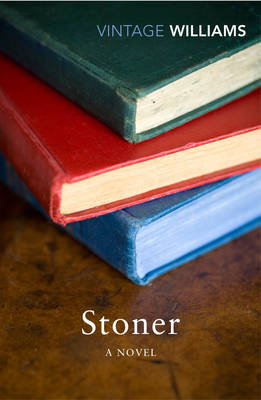
Several weeks ago people began to come into the bookshop and ask for Stoner. We got so many requests we kept it by the counter within easy reach. Initially I figured the title referred to some marijuana puffing dude, a paean to slackerdom, but I was entirely wrong. Stoner is a novel originally published in 1965, recently reissued by Vintage Classics. William Stoner is the name of the main character, a character not too dissimilar to the author, John Williams, apparently. It went into our “buy one get one half price” offer, and yet more people have bought it. I think part of the interest is that few people have heard of Williams, the novel is touted as a “forgotten classic”, and we all like the idea that we’re rediscovering something amazing.
From the first page we know that Stoner is the story of one man’s unremarkable life.
…he did not rise above the rank of assistant professor, and few students remembered him with any sharpness after they had taken his courses.
Stoner’s colleagues, who held him in no particular esteem when he was alive, speak of him rarely now; to the older ones, his name is a reminder of the end that awaits them all, and to the younger ones it is merely a sound which evokes no sense of the past and no identity with which they can associate themselves or their careers.
William Stoner is the son of poor farm folk. From an early age (six) he becomes used to hard work and is expected to take over the running of the farm one day. He has no plans to ever leave the farm, but his father surprises him by sending him to college to study agriculture and the “new ideas” for four years. At college Stoner discovers what will be a lifelong interest in literature. For me, the books most devastating moments are those between Stoner and his parents. The writing is so understated, the prose so calm and clear. It’s incredibly moving.
Stoner remains at the university. The one constant in his life is literature; he studies, teaches, writes. He marries a woman who seems only to exist to make his life a misery. My one criticism of the novel is how it is never explained quite why Edith is so unpleasant, not only to him, but also to their daughter.
Where the novel succeeds beautifully is in its depiction of sheer ordinariness. Although Stoner occasionally glimpses something more, be it in his work, or as a father, or in love, those glimpses, those moments of hope, quickly fade. Stoner is left with the disappointment of being human. The reader understands this only too well.
…she would live her days out quietly, drinking a little more, year by year, numbing herself against the nothingness her life had become.
I really did care about Stoner. For all its quietness there are plenty of life events to keep the pages turning. Well deserving of its “classic” status, this is a book I’m thrilled is selling so well. How marvelous, and what a shame John Williams couldn’t know how popular this novel would become. That’s very Stoner-ish.
Yes, this.
Tony Hogan Bought Me An Ice-Cream Float Before He Stole My Ma – Kerry Hudson

One of my fave novels of 2012 was Kerry Hudson’s stonking debut – Tony Hogan Bought Me An Ice-Cream Float Before He Stole My Ma. It’s a great read with characters that fizz off the page and sear themselves into the reader’s mind. Opening with the words “”Get out you cunting, shitting, little fucking fucker!”” we immediately enter the world of Janie Ryan. Her story takes place against a backdrop of poverty, council flats and B&B’s, benefits, booze, crappy food, strong women, and shitty men. Hudson’s voice is refreshing, lively, and real, and although the subject matter is bleak her humour shines through. Yes, the sweariness and Scottishness may have reminded some reviewers of Irvine Welsh, but I reckon there’s a fondness for, and a likeability to, the characters that make it closer to a Roddy Doyle novel.
The book has been critically acclaimed by far more important folk than I, and was shortlisted for the Guardian First Book Award, the Saltire Scottish First Book of the year, the Green Carnation prize and the Southbank Sky Arts Award. Pretty damn impressive! As of this week it’s available in paperback and to celebrate Kerry has been doing a wee blog tour. She’s been chatting to people about various things – her inspiration, favourite writing spots etcetera. I wondered if all the praise for her debut made writing her second novel super pressurised.
That difficult second album. Second novel syndrome. How to train to be a taxidermist. I googled all of these in the final months of finishing up my second novel, Thirst. If you are writing your second novel right now DO NOT DO THIS. It is very unhelpful as there are swathes of articles who’ll tell you about each and every author whose second novel got consigned to the bottom drawer. Forever.
The common reasons that these articles and blogs give for a second novel being difficult is: The first novel is autobiographic/semi-autobiographic and had been being ‘written’ for years before fingers ever hit the keyboard. That there is more pressure, people are waiting for the book, you have ‘readers’. That if you’re uncontracted (as I was) for that second book then the pressure is double because that might be it, game over, The End. I recognise all of these symptoms and I know I’m not alone, the writers I’ve spoken to about this gave their own stories of procrastination, despair, manic optimism over an idea only to realise it is pure panic-driven madness.
But, I live to tell the tale (boom boom). So here’s how I slayed the second-novel dragon:
I quit my job, gave up my flat, used every single penny I had and took myself off to Vietnam for four months. I don’t recommend this first step unless you’re feeling very brave and you know in advance that Hanoi is actually absolutely fucking freezing over the winter months but it did mean it was all or nothing in getting it finished.
I have always tried pragmatic about writing; it’s a job and there are jobs that are tougher, much tougher. Writing is a joy, having the freedom to write what we choose is a privilege many don’t have. Whenever I felt myself slipping into angst because a scene wasn’t working and thus becoming a little too fond of my South East Asian hot toddy (made with lime and Vietnamese whisky) I’d remember how lucky I was and Just Bloody Get On With It.
I was methodical. I had a schedule of when all of the editorial drafts needed to be completed; structural, a scene by scene rework (10 pages a day), another draft for the development of each of the main characters and a read aloud. Before I began reworking anything, I reread it and wrote down what was happening on the page and what I wanted to happen. I didn’t always stick to the schedule and the notes didn’t always help but at least I knew how far behind I actually was when I was slipping.
I downloaded Scrivener. Scrivener, you little beauty! My second book has two protagonists and three separate timelines. A huge, and very technical, departure from Tony Hogan. Scriveners functionality saved me from rocking in a corner while chewing on my own hair.
I stopped thinking about the Other Stuff. Other stuff is: the response to your first book, comparisons to the first book, fears of only having one book in you, terror that your publisher is buying other new books that might be like yours, other writers already publishing their second books, the voice in your head that is always ready to tear a strip off you. Instead, I just thought about the story, how vulnerable my characters were and how I wanted to do them justice.
So that’s it really: Arse to seat, organise, get Scrivener, get out of your own head and into the story. Sounds easy. It bloody well isn’t but it is worth it; as my debut comes out in paperback I know next July Thirst, my second novel, will be on shelves next to it. And I’m no longer Googling scary articles about the trouble with second novels so can spend more time looking at pictures of pissed off animals in fancy dress on Buzzfeed.
Ah, I’m so glad Kerry has managed to write her way through any worry and really look forward to reading Thirst when it comes out. For now though she’s organised a competition to win a signed copy of Tony Hogan…
‘Want to win a signed copy of Tony Hogan? I’m trying to put together a Tony Hogan soundtrack. Simply submit your song suggestion to me @kerryswindow on Twitter with the hashtag #tonyhogantune by the end of Tuesday 9th of July. If your song is one of the ten selected for the soundtrack (and you were the first to suggest it!) I’ll send you a signed copy of Tony Hogan.’
You’d best get cracking eh? You can find out more about Kerry at her website, and follow her on twitter @KerrysWindow.
Failure
I entered the Mslexia short story competition this year. My favourite writer, Janice Galloway, was the judge, so it was a must. It’s an excellent competition in an excellent magazine. I sent what I consider finished, polished, strong work, and got nowhere. Ah well, that’s the way it goes. I put a flippant post up about it on Facebook, and was heartened by the responses I got, both on the post and in private messages. Many writer friends entered this competition and didn’t make it either. Amongst them are a couple of poets who have collections published, short story authors, again with published collections, and a few published novelists. Professional writers with awesome CV’s entered and failed. That they shared this with me was enormously helpful so I thought I’d share it here in the hope it helps someone else too. I know the quality of these women’s writing. They are damn good. So, let’s remember that another judge may have picked a different final six. What resonates with me may not with you. It’s easy enough to weed out bad writing, but when you have, say, thirty stories all containing good quality writing, it will be about what speaks to the individual reader. If I read the stories belonging to the writers I spoke with on facebook I’m fairly sure I would favour one over the others despite knowing they are all fine writers.
A writer who has judged several competitions told me she only ever sees the entries the first readers have decided should make up the long-list. Who knows, Galloway may have adored my words if she’d ever got to read them, but my genius went unrecognised in the initial sifting process. (Yeah, ok, unlikely, but hey, it’s my thought, I can have it if I want.)
I’ve won competitions before, and I’ve obviously lost them too. Winning is a delightful, validating, endorsement. Losing is a huge blow. It makes you question your worth as a writer. One of the things that was discussed on my Facebook page was that some of the writers had gone back over their entries and were truly surprised to not be able to see obvious edits they could make. I do a great line in self hatred, and the first thought on losing is usually that the story isn’t good enough, and that one was delusional in thinking it might have stood a chance. That’s nonsense, the same story that flops in one place can, and does, succeed elsewhere. That’s not to say improvements can’t be made. Do re-read with a critical eye – change what leaps out, then look for somewhere fabulous to submit to. Keep going. Remember why you write in the first place. I don’t write in the hope of winning competitions, I write because I have this impulse to fictionalise things. It’s part of my being. If I can then share those words and communicate with people, then all the better. If I can get recognition for it, well, better still. Financial recompense would be amazing. I’d love to win ALL the competitions and be published everywhere, but even if I never win anything again, I’m going to keep on writing. Don’t lose sight of the heart of your words. Oh, and to the person who told me (kindly) it might be off-putting to potential publishers to mention failures, I don’t believe that is true.
In his superb book “The Antidote” Oliver Burkeman has this to say about failure:
Fortunately, developing a healthier approach to failure may be easier than you’d think. The work of the Stanford University psychologist Carol Dweck suggests that our experiences of failure are influenced overwhelmingly by the beliefs we hold about the nature of talent and ability – and that we can, perhaps quite straightforwardly, nudge ourselves towards a better outlook. Each of us can be placed somewhere on a continuum, Dweck argues, depending on our “implicit view” – or unspoken attitude – about what talent is and where it comes from. Those with a “fixed theory” assume that ability is innate; those with an “incremental theory” believe that it evolves through challenge and hard work. If you’re the kind of person who strives mightily to avoid the experience of failure, it’s likely that you reside near the “fixed” end of Dweck’s continuum. Fixed-theory people approach challenges as occasions on which they are called upon to demonstrate their innate abilities, and so they find failure especially horrifying: to them, it’s a sign that they tried to show how good they are, but didn’t measure up. The classic example is the young sports star encouraged to think of himself as a “natural” – but who then fails to put in sufficient practice to realise his potential. If talent is innate, his unspoken reasoning goes, then why bother?
Incremental-theory people are different. Because they think of abilities as emerging through tackling challenges, the experience of failure has a completely different meaning for them: it’s evidence that they are stretching themselves to their current limits. If they weren’t, they wouldn’t fail. The relevant analogy here is with weight training: muscles grow by being pushed to the limits of their current capacity, where fibres tear and reheal. Among weightlifters, “training to failure” isn’t an admission of defeat – it’s a strategy.
Happily, Dweck’s studies indicate that we are not saddled for life with one mindset rather than another. Some people manage to alter their outlook simply by being introduced to the fixed versus incremental distinction. Alternatively, it’s worth trying to recall it next time failure strikes: next time you flunk an exam, or mishandle a social situation, consider that it’s happening only because you’re pushing at the limits of your present abilities.
You can read a little more here. I’m hoping to learn how to see failure as an essential part of life, and stop being so afraid of it – I’m definitely more of a fixed theory person and am hoping to persuade my mind to allow me to become more of an incremental kinda gal.
Not really a best of the year with salt
This is not really one of those end of year best lists as it relies solely upon my rubbish ability to recall what I have watched, read, listened to and thought for a whole year. So, instead I’ll call it a “thing” – tada:
Keith Ridgway’s Hawthorn and Child is my most memorable read of 2012. My review is here and I love that despite reading it in August I am still thinking about it in January.
Honourable mentions to Kerry Hudson’s Tony Hogan Bought Me an Ice Cream Float Before He Stole My Ma which fair fizzes off the page, and Jenni Fagan’s superb The Panopticon (review here).
2012 began with me adoring Nicki Minaj. She seemed poised to be the smartest, coolest rapper/singer/hip-hopper in the universe. But then… that didn’t happen.
I don’t know what I did before Spotify, making my own playlists makes me so damn happy. I surprised myself by listening to my “Beans. Cheese. Toast.” playlist far more than “Hip Hop Happiness” or “Goodness”. Turns out you can’t beat damn fine pop. I did really like Mark Lanegan’s “Blues Funeral” – it sounded proper. And I rediscovered my love of Pearl Jam.
Telly was Elementary, The Mentalist, Chicago Fire, Home and Away and Neighbours (always) and my absolute fave – Sons of Anarchy. Edit – Oh, and Homeland of course. I am ever so slightly obsessed with how awesome Clare Dane’s nose is.
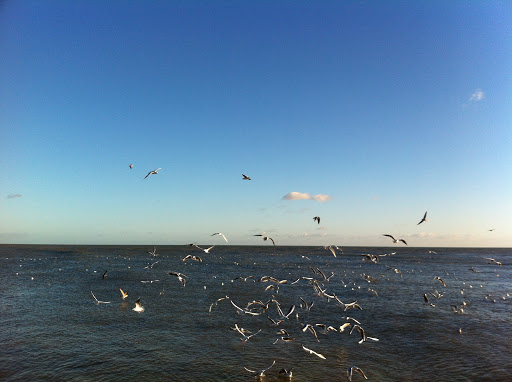
I took these snaps on New Years Day when I went for a walk on Littlehampton Beach – it was a day bright with possibility and made me feel entirely content. I wish you all a wonderful 2013.



FRiGG Twitter issue
The latest edition of FRiGG is a Twitter issue or, more accurately #TheTwitterIssue. A collection of my rearranged tweets – “Life is Time Consuming” – can be read HERE alongside shiny tweeters Roxane Gay, Crispin Best, Erin Fitzgerald, Ravi Mangla, Scott Garson, Katrina Gray, Rusty McGee, Brad Green, xTx, Jules Archer, Danielle DuBois, Kima Jones, John Minichillo, Salvatore Pane, Russel Swensen, Kimberly Walters.
Thanks, Ellen Parker!
Erm…
Can we all pretend I never said I was trying to write a novel? Let’s never speak of it again.
Kerry Hudson – woot woot! Tony Hogan Bought me an Ice Cream Float before he Stole my Ma – Blog Tour
I am so chuffed to be part of Kerry Hudson’s blog tour. Her debut novel “Tony Hogan Bought me an Ice Cream Float before he Stole my Ma” was published this week and it’s an absolute cracker. Her characters fizz off the page and sear themselves in your mind. Her use of language is a real pleasure as she describes people, places, feelings and situations in vivid, fresh ways.
So, this is Kerry:

Bio
Kerry Hudson was born in Aberdeen. Growing up in a succession of council estates, B&Bs and caravan parks provided her with a keen eye for idiosyncratic behaviour, material for life, and a love of travel. Tony Hogan Bought Me an Ice-Cream Float Before He Stole My Ma is her first novel. Kerry now lives, writes and works in London.
Blurb
When Janie Ryan is born, she’s just the latest in a long line of Ryan women, Aberdeen fishwives to the marrow, always ready to fight. Her violet-eyed Grandma had predicted she’d be sly, while blowing Benson and Hedges smoke rings over her Ma’s swollen belly. In the hospital, her family approached her suspiciously, so close she could smell whether they’d had booze or food for breakfast. It was mostly booze.
Tony Hogan tells the story of a Scottish childhood of filthy council flats and B&Bs, screeching women, feckless men, fags and booze and drugs, the dole queue and bread and marge sandwiches. It is also the story of an irresistible, irrepressible heroine, a dysfunctional family you can’t help but adore, the absurdities of the eighties and the fierce bonds that tie people together no matter what. Told in an arrestingly original — and cry-out-loud funny — voice, it launches itself headlong into the middle of one of life’s great fights, between the pull of the past and the freedom of the future. And Janie Ryan, born and bred for combat, is ready to win.
Just from the arresting cover image and the title this feels like a book you want to read.

I read an article about with Kerry at The Herald in which the interviewer reflects “What strikes one immediately is how unusual it is to find such characters in fiction – in the driving seat, that is, and written by someone who has lived that life, rather than parodying or mocking a class they don’t understand.” And I nodded whole-heatedly. The lit world does seem chock full of writers who are mainly white, middle class, and well educated. Kerry’s response was “I suspect the reason there aren’t any books (that reflect where she comes from) is that not enough people escape sufficiently with enough intact to then be able to write a book about it and get it published . Obviously I work for a children’s charity and I see it all the time: young people will just be crushed and futures absolutely destroyed by a bad upbringing or a neglected upbringing.”
I have known Kerry in the internet writing world for several years now. We are twitter, blogger and Facebook pals. One of the things that has impressed me the most about her (apart from her ace writing skills, obviously) is how she just got on and did it. I asked her to tell me how! What worked for her in terms of motivation and discipline. And I asked how she manages to use social media without being sucked into its time wasting grasp. This is what she said:
Like most authors I work full-time as well as writing novels. I often liken the situation to bigamy, trying to split your affections painfully in half while reassuring both parties you’re not short-changing either of them, that it’s The Real Thing, just twice.
It took me seven months to write Tony Hogan… from writing the first line on a sweaty Vietnamese train to sending it off to my now agent while living on a boat on the Thames. That’s obviously considered fairly quick but I had the absolute luxury of having each and every day to do nothing but recreate those swear words, council estates and egg, chips and beans dinners of my childhood.
My second novel, Thirst, was written while holding down a full-time events job. I was back in London with all the friend and family commitments that go with that and also dealing with rounds of edits and pre-publication work for Tony Hogan… I did however get two months of full-time writing in thanks to a grant the Arts Council England through the National Lottery Fund. I finished Thirst in a year and half.
Big difference eh?
So, I’ve worked it both ways. I’ve squeezed writing sessions into ten minute slivers where before I’ve even written a word I’m mourning the writing time being over, and I’ve also had whole wonderful days stretching ahead to get down a measly 1000 words. Here’s what I’ve learned:
If I want to write I can’t mythologise my writing: As soon as I start thinking about it as something as ‘proper’ as a novel I freeze up. Instead tell myself it’s just a story. I tell them all the time in other circumstances; over a pint, when I’m late for work, talking about a really amazing gelato place I’ve found (it’s Gulupo in Soho, you should all go). They are just words, strung together to make descriptions, to explain something the way I intended to. Respect your writing but remember, at core, it is just a story same as any other. So especially for that first draft, just sit down and write it.
Which brings me to number two. When I’m writing my first draft I let my strange, often incomprehensible, mind do what it wants with no pressure to Fix Things. It goes without saying it’s impossible to make a table without wood or a sculpture without clay. That first draft for me is all about creating that ugly, shitty, unruly lump of raw material to make something with.
Set a target: The most productive writers I know set a daily target and stick to it. Make it 200, 500 or (my preferred figure) 1000 words but make it realistic and DO IT. Of course, some days you’d submit yourself to a Vajazzle than sit down and write that story. For me that applies to all but the rarest days, but once you get the first few sentences out you’ll be grand and when you’re finished you can look the world in the eye and say, ‘yes, I’m a writer.’
Social-media mumblings: I love me some Twitter but I know it could be easy to while away hours finding out what people ate on their toast that morning. Instead, I use the #amwriting hashtag and tell everyone what I’m planning to do that day and then report back on how much I actually did. I blogged my wordcount everyday when writing Tony Hogan… using that potential public shaming as a motivator works for me. I really don’t want to go back on Twitter two hours later and say I’ve watched two epic episodes of crime-writer-turned-crime-buster series Castle and written only three words.
Brace yourself…I don’t have a TV: I had one for years and years, growing up in our house it was on pretty much 24 hours, I love TV. And that is why I can’t have one. I watch box-sets or catch-up TV but no more than a few hours a week. I know, I know, it seems like eating a cornflake as your weekly calorie intake but honestly, I don’t miss it that much and I write a lot more.
Laugh: That is all. Just laugh. Writing is hard sometimes, there will be moments of disappointment, days when the words won’t come, when you want ceremonially burn your latest manuscript. So remember to laugh and, as much as possible, keep it in perspective. They’re just stories after all…
What a fab response. Thank you. I also had a few Smash Hits style daft questions to finish up with:
Janie relishes her food so here is a wee food based bit:What are your favourite crisps?
Salt and Vinegar or Pickled Onion Space Raiders
Favourite soft drink?
…Coke-float!Favourite cheese?
Is it greedy to say all of them?You write so convincingly of being a teenage girl My favourite line in the whole book is “Even though I was free dinners and didn’t have the right coloured uniform I still got to be boss because I didn’t have glasses or a plaster over one eye…” It sums up so accurately the hierarchy of school cool. Where did you fit in?
It depended on the school. Sometimes bearably in the middle so you flew under the radar if you stayed in shady corners, but mostly right at the bottom with the geeks and freaks. Funnily enough though it’s the ‘bottom of the pack’ kids who mostly went on to do cool stuff – revenge of the geeks indeed!Who was the poster on your bedroom wall?
Keanu ReevesWho is the most famous person you’ve met?
I once used the toilet after Angelina Jolie at a theatre in London. She queued like everyone else, was tiny and perfect and I swear to God the cubicle smelled of roses afterwards…I’m aware this is making me sound like a scary stalker.What’s your favourite colour?
RedWhat’s your favourite smell?
The smell of toast
Favourite Cuss?
LOVE this question! I’m quite fond of Motherfucker at the the moment delivered with the emphasis on the Mo-.
Thank you. I wish you MUCH success with your book.P.s Will there ever be a follow up?
I’d love to write a follow up and see what Janie gets up to next. I definitely wouldn’t be ruling it out!
Hurrah! I want to know what happens next, definitely.
Kerry’s blog tour continues tomorrow at The Little Reader Library Blog
Oh, and she is running an AMAZING competition that I totally want to win. (PICK ME PICK ME!)
The prize draw is open to anyone who hosts or comments on a Tony Hogan post. There is no purchase necessary. There is no limit to how many times a name can be entered i.e. if you comment on three blogs you have three entries but it’s only possible to win one prize per person. The winning names will be drawn at random on Wednesday 1st August and announced on my Tumblr blog and on Twitter.
1st, 2nd and 3rd prizes consist of:
1st prize – A three chapter or synopsis critique plus afternoon tea at Beas of Bloomsbury, London (at a mutually beneficial date and time) with Juliet Pickering from the AP Watt Literary Agency to discuss your critique. Plus a personalised copy of Tony Hogan Bought Me an Ice-Cream Float Before he Stole My Ma.
2nd prize – A literary hamper containing a personalised copy of Tony Hogan Bought Me an Ice-Cream Float Before He Stole My Ma as well as three of my most recommended writing theory books and Hotel d Chocolate chocolates to enjoy while reading them.
3rd prize – A personalised copy of Tony Hogan Bought Me an Ice-Cream Float Before He Stole My Ma.
You can keep up with all things Kerry at
Website: http://www.kerryhudson.co.uk
Twitter: @Kerryswindow
Short story goodness
Today is International Short Story Day. (It does sometimes feel as if there’s always a short story day of some description taking place.) There is a list of events and stories up here. It seems like the perfect time to draw your attention to a wonderful story which was recently announced winner of the Commonwealth Short Story Prize. It’s written by Emma Martin, who I’m proud to say is a pal of mine. I have that delicious feeling of having known an amazing writer before everyone else twigged and I’m truly delighted for her. Whooooo hoooooo, Emma! You can read her story at Granta.
 Sara Crowley