Somewhere Else, Or Even Here by A.J Ashworth

A.J Ashworth won Salt’s Scott Prize to have her debut collection published. “Somewhere Else, or Even Here” contains 14 of her stories. I’ve taken my time reading this as I found it best to read just one tale at a time and savour.
This is a good collection. Ashworth does very well with conjuring place and people. Her stories are full of evocative details even when describing mundane tasks such as putting tools in the back of a van and starting it up: 
“…he laid his tools down in the back like they were offerings to the gods of work; stained and dirty offerings which had never yielded any blessings. Then he got behind the wheel, started up the engine and watched as the windscreen heaters blew air onto the tracing paper frost, making a glassy stain build and grow there.”
Astronomy is a recurring motif with characters studying the subject, having star tattoos, sending Chinese lanterns into the sky, having moon faces, gazing upwards, talking about the universe. It’s not merely the repetition of stars/planets/sky that unifies the stories, some of them feel related by character or theme despite the diversity of subjects. “Bone Fire” has a first person narrator who recalls Jeremy from the opening story, “Sometimes Gulls Kill Other Gulls.” I wondered if the woman from “Offerings” was another perspective on the story “The Future Husband.” “Paper Lanterns” has a zanier counterpart in “Bananas.” 
“Paper Lanterns” was a story I found  a little obvious, although if one were to look for a textbook “good” story it ticks all the boxes.  It describes the aftermath of a child’s death, but does so in an expected way. “Bananas” took an entirely unexpected approach to a similar event and was all the stronger for it. 
Occasionally I knew I was being expertly manipulated. Ashworth has excellent storytelling craft and knows how to mine an emotional seam. Loss, death, grief, illness, fear, are all here. I favoured the stories that caught me unawares. Despite how solid “Eggshells” and “The Prophecy” were, I had an understanding of them from the outset. Of course, one can still admire a familiar journey, and I did.
I didn’t understand what was happening in “The Future Husband”, or how it could resolve. It worked superbly; it was tender, note perfect, impossible. “Coconut Shy” was wonderful in its dealing with burgeoning sexuality and a disappointing beau contrasting with the older, experienced fairground worker “…who strolls from around the back of the counter, smooth and slow. Jimmy shifts to one side, looking thin and unsteady as a daddy-long-legs beside him.”
I think Ashworth is a writer who has much to offer and I thoroughly recommend her collection. I look forward to reading more of her in the future. 


Nightjar press – 4 chapbooks

Nightjar Press is an independent publisher of limited edition individual short story chapbooks. It’s delightful to see single short stories published with such care. Each of the four stories I was sent have rather ace cover illustrations and cost £3.
It’s difficult to review short stories without being spoilerific, but I’ll give it a go:

Lexicon by Christopher Burns

My knowledge of Greek mythology is minimal and it is with a smidge of shame that I admit I wasn’t familiar with Asterius before reading this tale. I searched Wikipedia afterwards and it seems that Burns may be riffing off Jorge Luis Borges 1947 short story “The House of Asterion.” Whilst knowledge of that may enhance the reading pleasure I don’t feel it marred my own enjoyment.
The narrator is an amusing man, a self-important academic who has invited a woman to dinner. He speaks enthusiastically about the Greeks, keen to “illuminate” her on the subject. He knowingly tells the reader “I like to begin my social evenings with a little minor irritation.” Passages on Asterius are interspersed with Harry and Heather’s evening in this neat story with a dark heart.

                                        
Field by Tom Fletcher

This is a horror story in which you can almost hear a film score ratcheting up the tension as the protagonist, Tom, a forestry Commission warden, sets off to deal with a group of youths camping illegally at the edge of the lake. Irritated by his junior colleague, Sarah, yet perfectly at ease with the idea of confronting the youngsters, they set off in his Land Rover. They find the tents and sleeping bags, but where are the people? 


Sullom Hill by Christopher Kenworthy


The first line immediately had me wanting to know more: “When Neil Kingsley came around, I’d hide under the window-sill and pretend not to be in.” 

Three young lads, one with special needs and a mental age much younger than his years, form a type of friendship; one of those uneasy alliances that schoolboys find themselves in sometimes. Tony is a bully who loses friends with worrying regularity. Neil is a young man with difficulties who thinks of the narrator as his pal. I read with wariness, worrying about what would happen. It’s a story full of evocative descriptions, of the boys, the hill, the weather, and it ends in a particularly unsettling way.


Remains by Ga Pickin

There is an immediate and effective sense of place and I could almost feel the cold, shivery weather. 

“A head wind was getting up, and it sighed against his ears like Chinese whispers. Disdaining his choice of warm clothing, its chilled breath slid down his collar and up his sleeve, between buttons and past his T-shirt, touching his bare skin.”

Brr.
This is a marvelously atmospheric and creepy story. The narrator, an experienced walker, has set out to meet friends in a holiday cottage. The light is fading and the batteries of his torch stop working. It’s beautifully written, the landscape becoming eerier as the story progresses. I raced to the end, anxious to know what would happen. 


I can genuinely say that each of the stories is of a high quality and I really love what Nicholas Royle is doing for the short story here. Bravo.

"Being Dead" – Jim Crace


Celice and Joseph, a fifty plus couple, are the “dead” of the title. We witness their deaths and watch as they lay undiscovered for a few days, while being told their story. The omniscient voice here has the same kind of chilly detachment I equate with some other male literary “names.” (McEwan for one.)  
There are beautiful descriptions throughout with Crace employing a scientific eye to zoom in on the decomposing bodies, and smoothly taking us to the past to watch the developing relationship between Celice and Joseph. 
“She could reach high corner cobwebs with a dusting stick and spin grey candyfloss.”
“…his hand on hers, their faces rhyming…”
and many more such descriptions are evocative and vivid. The forensic detailing of decaying corpses is suitably gross. However the marriage of Celice and Joseph doesn’t convince any more than the other aspects of their lives. They are in their fifties but seem much older. Even in youth Joseph was dull but Celice was not, I don’t think. When Syl, their daughter, is introduced I hoped she would inject some energy into the novel but alas, she is just another female described in such a way that we understand that although she, like her mother before her, has desires, her sexual encounters are joyless. She has “use” of a man. Crace’s men want sex and are stupid because of it, his women want sex with men sometimes but are mostly reluctant, desperate (Celice), or do so to gain something, (a lift in Syl’s case). All the characters seem so dry and it is hard to care for people described so coldly, even when they are dead.

Despite the murders, the tragic death in their past, and the search for them by Syl, there seems precious little story. There’s no hope in the end, no resolution. They are dead, Syl lives on. Blah blah blah. I like the idea of examining a life backwards and forwards by focussing on a few key events but although Crace clearly writes well these people never came alive for me and I remained utterly unmoved throughout.

✰✰✰


The only book to be reviewed twice on my blog: Luke and Jon by Robert Williams

My son Dylan has been reading Luke and Jon and discussing it with me. I asked him if he’d like to write a review for my blog. He said yes, but that he was going to say exactly what he thought and hoped he didn’t upset the author. 


“I think Luke and Jon was very beautifully written. It had a really good mixture of chapters that go from death to new beginnings. I like the fact that Luke and his dad were in a way outsiders in a little creepy village which they had never heard of and only had enough money to buy a cheap crumbling and depressing house. Then Luke meets probably one of the strangest but loving and intelligent people: Jon. I think it’s absolutely touching when Luke and Jon become best friends. My favourite bit was when Luke and his dad adopted Jon, it really made me emotional. My only dislike about the book was the ending even though it was a lovely ending about his mum in the sea I would of liked to read more about how Luke his dad and Jon lived together but it wasn’t a let down because everything else made up for it in this wonderful book.”


Review by Dylan Crowley


Ayiti by Roxane Gay

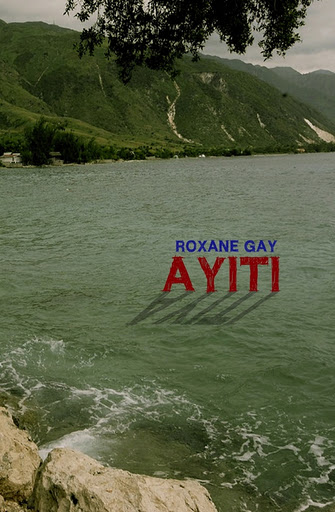
Ayiti, published by Artistically Declined Press, is the debut story collection from Roxane Gay, each story concerning Haiti and its people.

The first story you arrive at announces itself with the block capitals of MOTHERFUCKERS. And wow can this small story carry a great weight. Wonderful opener.

In “Things I Know About Fairytales” the narrator says “At a dinner party once, with some of my colleagues and some of Michael’s and lots of wine and music and excellent food and pretentious but engaging conversation, talk turned to Haiti. Everyone leaned forwards in their seats, earnest in their desire to be genuine in their understanding of the world. One of my colleagues mentioned a magazine article he read about how Haiti had surpassed Colombia as the kidnapping capital of the world. Another colleague told us about a recent feature in a national magazine. Soon everyone was offering up their own desperate piece of information, conjuring a place that does not exist.”

I wonder if this is non-fiction as it reads so true, and I suppose I recognise that earnest desire to be genuine, and the failure of real understanding that so often accompanies it.

In “In the Manner of Water or Light” the narrator says “We are the keepers of secrets. We are secrets ourselves.”

Roxane Gay may well have secrets, but she is also a fearless truth teller. Her stories work beautifully in showing us truths without screaming them. Sometimes it is that which remains unsaid that resonates strongest. Her writing is beautifully empathetic, powerful, and often painful.

In “Cheap, Fast, Filling” she makes me sympathise, despise, and then care about her character in just 3 pages. Yeah, that skilled.

And she’s funny too (see “Voodoo Child” and the Primer in “There is No “E” in Zombi Which Means There Can Be No You or We” – in which she slides from amusing to disturbing ever so smoothly.)

She has an utterly distinctive voice of her own. There are many examples of her words online as she blogs, writes articles, and fictions (you can find her at I Have Become Accustomed To Rejection) and whatever she writes carries that assured, intelligent, calm, witty voice.
Two jolly good books

I recently read a couple of damn fine books and made a mental note to blog about them. The problem with mental notes is that they end up muddled and mixed in with all sorts of gubbins from my mind so I am unable to offer much in the way of constructive thinking. Ho hum, no reason not to say that I really liked them is there?

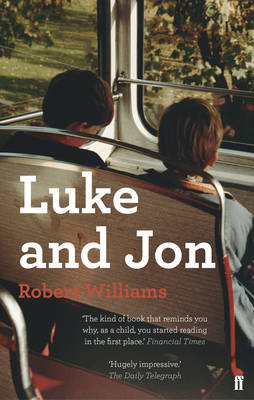
The first book is Luke and Jon by Robert Williams. It’s now available in paperback for only £6.99 which is a bargain. It’s one of those books that was originally marketed as Young Adult and is now Adult Fiction. (It’s fairly meaningless but when I read it I certainly didn’t feel I was reading a children’s book, equally I thought that my 13 year old boys may enjoy it. Dylan has just begun it though he’s a little wary in case it’s too sad as I told him it was about a boy whose mum died.)
Anyway, the story is about a 13 year old boy and his relationships with his father, in the wake of his mother’s death, and his friend Jon. It’s not a showy book but it’s full of calm, quiet truths. I’m not over keen on the phrase deceptively simple but, erm, yeah, this is. Williams creates a wonderful voice and a story with proper depth. He’s good at capturing the difficulties of being a lad at school, and he’s written a novel with real heart. Oh, and it totally sucked me in and toyed with my emotions. Yes, I may have shed a tear or two. 
“Eventually I got surer on my feet and looked up to see what was overhead. It was a trick I learned from my mum. She said that every now and again, walking your usual route through town or to school, you should look up as you travelled instead of straight ahead, that you would see things you hadn’t seen before. And she was right. The first time I walked through our old town and lifted my head up I saw things I’d never noticed in a town I’d lived in all my life. In the forest the trees stretched high and higher into the sky, disappearing out of sight and there was only the odd glimpse of sky poking through the canopy. It felt like we were indoors; it reminded me of the church on the day of mum’s funeral: ancient and powerful.”
The second book is Everything Ravaged, Everything Burned by Wells Tower Oh my goodness, if you’re a short story fan and haven’t yet read this collection then I envy you, for you must, you shall, and it will be fabulous. 
Wells Tower describes things in a gorgeously fresh way. His stories are drenched in images and unique perfect phrases. I am deeply envious of his talent. (The worst story, oddly, is the title story. It’s absolute tosh and a real let down that is the last thing one reads. How strange.) 
“He scrambled along the spit of rock. The wind cut the stagnant dampness of the day and dried the sweat on his face and chest. He took the salt into his lungs and savored the pure itch in his chest. He touched the long grasses waving in the water like women’s hair. He crouched to observe the barnacles, their tiny feathery hands combing blindly for invisible prey.”
So, there ya go – two good books (coincidentally both with brownish covers.)