Cartwheel by Jennifer DuBois

I was sent this book in e-reader format which had no accompanying blurb, so I read with no inkling of what it was about. It begins with a father, Andrew, arriving in Buenos Aires with Anna, his youngest daughter. Lily, his eldest, is in jail accused of murdering her room mate. It is clearly based on the murder in Italy of Meredith Kercher, and the conviction of her fellow exchange student, Amanda Knox.

Amanda Knox inspired page after page of speculation in the Italian, UK and American presses. She was deemed to have behaved inappropriately in the aftermath of the murder and faced “trial by media”. Like Amanda Knox, Lily is examined through her social media pages, messages, photographs and cctv, and judged long before her case goes to court. The story is told through the perspectives of Lily, her father, the prosecutor Eduardo Campos, and Sebastian, the young man she had been casually seeing.

Initially I was impressed. The writing is good enough that it took me a while to realise that despite the occasional interesting psychological insights there’s not an awful lot of substance. It’s as if DuBois skates prettily across the surface of what is actually lurking darkly beneath.

Sebastian’s parents died in suspicious circumstances and left him alone, wealthy and isolated in a sprawling mansion. (I couldn’t fathom any relevance to them being spies) and finds comfort watching the Carrizo house where Lily and Katy are staying.

“Sometimes he imagined that they could see him, too. This fantasy kept him busy and decent, dressed, up at reasonable hours, engaged in activities that were arguably fruitful.”

I liked that very much. It felt as if it could be real whereas in a novel based on reality, not much else did. Sebastian provides another good line when he recalls his father telling him:

“Nobody is really paying attention to you. Most people don’t really get this. They think they must count more to other people than other people count to them. They can’t believe the disregard could truly be mutual. But it’s a useful thing to learn…”

Perhaps this goes against the central theme of the novel which seem to be the idea that we are all being watched, even when we think we aren’t, because our trail of photographs and social interactions can be found and examined if something happens which warrants public scrutiny. Pieces of a puzzle can create a picture that looks like truth but isn’t.

Lily is portrayed well as one of those bright, intelligent, but not quite as unique as she hopes, teens. Isn’t that most of us when we were her age? Katy remains a sketchy “perfect” girl. I had sympathy with Andrew as he struggled to deal with how off kilter his life was. I thought the way he got things wrong, and realised that, made him quite endearing. Sebastian, as we are repeatedly told, suffers from sounding sneering and sarcastic, however, it’s the prosecutor who is the least realistic of the characters. He has an on and off love affair with an erratic woman who serves as a reminder that behaviour can be eccentric, odd, even cruel, without being illegal. Neither his love affair or prosecution convinced me.

Disappointment comes with the realisation that reading Cartwheel is rather an empty experience. It’s a well written book which elevates it beyond a schlocky crime biography –  a literary book I suppose. But that doesn’t stop it being a novel about an actual horrific murder. I think I would need to feel it added some… understanding or something, for it to succeed. As it stands I feel a bit dubious about why it was written.

I Will Never Read…

There are some authors who the public adore. Their books sell and sell and sell. There are no need for bookseller recommendations for them, people just see ’em and buy. When you think there can’t possibly be anyone in the country who might not have their books, they continue to sell. Perennial bestsellers. And yet, I will never read them. For no apparent reason I have taken against them. I have no interest whatsoever. Zilch. A gazillion customers will tell me how much they adore these books and yet I remain certain I will never be enticed. It’s interesting to me that my brain has this reaction. I assume you also have popular authors that you won’t ever read? And that similarly there’s no logic to your prejudice? I’d be interested to hear who those authors are.

Anyway, number one in my series of I Will Never Read… is Khaled Hosseini, author of The Kite Runner, A Thousand Splendid Suns and his latest, And The Mountains Echoed.


Back This Way at FRiGG Magazine

I’m delighted that FRiGG Magazine have published what is (at least for now) my favourite story – “Back This Way”.

Massive thanks to FRiGG’s editor, Ellen Parker, for just getting it. She made a few suggestions for edits which so improved the story that if I were given three wishes my first would be that Ellen Parker would read everything I ever write and perform the same magic. (My second and third would be, y’know, world peace and all that.)

The Fall issue looks ace. I’ve already checked out some really good words by Chris Garson and an intriguing story by Kevin Spaide, and am looking forward to reading more.

Worst. Person. Ever. by Douglas Coupland

Image


I couldn’t finish this book. Really, I just couldn’t. Somewhere around page 150 I flicked forwards and saw more of the same and I just could not be bothered. I’ve read every one of Coupland’s previous novels. That’s 14/15 of ’em? And whilst he is, I think, inconsistent, he has long been someone who I will always always read. Of course it’s all subjective, but, for me, when he gets it right he’s not just spot on and zeitgeisty, he’s also a writer of depth. My favourite novel of his is Hey Nostradamus! Worst. Person. Ever is definitely my least favourite. It is, apparently, “written to be funny. That’s all it’s about. It’s not going to give you special meaning about the universe.” which is fine and dandy, as long as it can sustain the humour. 

It’s written from the perspective of Raymond Gunt (ooh, look, I nearly wrote Cunt) an unemployed camera man who agrees to shoot a Survivor type show in Kiribati. His despised ex-wife is his boss. He hires a homeless man to be his assistant as he has nobody else he can ask. He’s friendless, penniless, without morals, misogynistic, and chock full of all kinds of hate. 

It started well I thought, taking me by surprise with the hilariously descriptive line:

There I was, at home in West London, just trying to live as best I could – karma, karma, karma, sunshine and lightness! – when, out of nowhere, the universe delivered unto me a searing hot kebab of vasectomy leftovers drizzled in donkey jizz.

But x amount of pages of the same unrelenting, shockingly rude for the sake of being shockingly rude, prose becomes quickly tiresome. Gunt seemingly abuses an obese fellow plane passenger to death. He lusts after women in the basest of terms. He gets into trouble. He’s rude. Again. And then again. 

There are still some familiar Coupland moments. He describes a waitress as having “…her mind full of pseudonews” – that babble of 24 hours news streaming. He provides wry footnotes. He does write some bitingly funny lines. However, the novel read to me like a writing exercise: Write the most obnoxious character you can think of.  The hideous sexism was hard to cope with, even if it is meant to be ironic, it’s still hate. Ultimately though, the book bored me. Shame. 


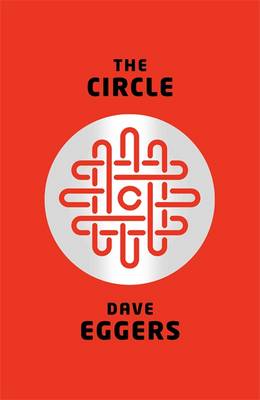
The Circle by Dave Eggers

For some reason I always link Dave Eggers and Douglas Coupland. Maybe because they have long been my two favourite contemporary male authors. Egger’s latest novel “The Circle” definitely brings to mind “Microserfs”.  The Circle is an exciting, innovative, successful Silicon Valley company. Being employed by them is Mae’s dream job, and she is incredibly grateful to her best friend, Annie, for getting her into the organisation. We see the enticing offices through Mae’s eyes as she is given her introductory tour, taking in the freebies on offer, the glitzy, glamorous setting, the fun, the youth, the talent. She settles into her role answering online queries, determined to meet the high grade challenge on customer satisfaction and push herself ahead.

Her job quickly develops, and she keeps pace with additional screens and requests. She’s enthusiastic and happy. She socialises on the work campus, sometimes she even sleeps in one of the dorms. The Circle seems to be modelled on Google and Facebook. It integrates all internet activity so that it runs zings (tweets), searches, financial transactions, tracking, and beyond. Mae meets a guy who is doing interesting work in the field of child security. The company aims for some unclear “completion”. Its ethos is very much one of transparency, and it sets up cameras all over the world, constantly recording, reporting, watching.

“If you aren’t transparent, what are you hiding?”

All employees are given health monitors they wear on their wrists. The company cares for them. The company cares for all, including Mae’s dad who has MS and who the company begins to treat, putting up cameras all over her parent’s house to continually monitor him.

As I read I realised how Facebook began to automatically download pictures from my iPhone recently, and how Spotify shares information about what music I listen to. How I’m wearing a FitBit flex, not a million miles away from a health bracelet. How easy it is to know such a lot about me via Google. I have always been equal parts blasé and cautious about the information I share. Or, at least, I had supposed I was. Reading this made me want to immediately delete my social media profiles and run the hell away from the internet. But that moment passed, and I facebooked how I liked this book, and I’ll tweet this blog post, and I’ll post my review on waterstones.com.

Mae’s ex says to her:

“No one needs the level of contact you’re purveying. It improves nothing. It’s not nourishing. It’s like snack food.”

This is true. It seems harmless, but is it? We watch as Mae gets sucked deeper into The Circle, and we hope that she’ll be ok.

I really enjoyed this novel. The ex who likes to make one off pieces of art seemed a wee bit of an obvious foil to the giant corporation, and Annie’s heritage sounded like a clear plot device to me the second it was mentioned, but they are minor niggles about what is not only an engaging story, but a thought provoking read.

Read it and delete.

The Deaths by Mark Lawson

Four wealthy families live in four exclusive listed houses in the countryside, a half hour commute from London. From the outset we know that one of these families has been murdered, and Lawson’s novel keeps the big reveal of who and why until the end part of the book. Instead he introduces us to each of “The Eight” as they commute, work, shop, drink, eat, and holiday together. On the surface all is perfect, inevitably, not far beneath those glossy veneers, all is far from ok.

The difficulty with having four sets of couples is in establishing distinct personas for each. Max, Jenno, Emily and Jonny seemed more vivid to me than Simon, Tasha, Libby and Tom. Added to their voices are those of the children, Nick (a fellow commuter), the investigating police officers, a female vicar, a nanny. Lawson’s cast is large, as is the novel, and I don’t think he manages to capture all the voices. His attempt at teen speak is rather clunky:

“Jeez, this is awks… He’s really old (thirty?) but dead fit and definitely gives her the full body scan, even though Mumsie made her wear a body-burka and what she calls the Sensible Coat. Tilly was, like, I’ll be inside all day but she was only on transmit as usual. Troll.”

He does, however, excel at pompous men whose speech is still peppered with juvenile public school phrases.

It’s not really a murder mystery, although of course it is that; it’s a satirical look at life now, a social commentary for the middle aged. Smart phones, Waitrose, drinking too much, children speaking in faux gangster styles, the economy, hypochondria, internet porn, coffee culture and so on. There are funny lines such as “Simon blames Top Gear for the fact that so many British men now regard conversation as violently belittling banter.” There’s also a lot of sex talk, and some sex scenes that may surely be nominated for this years Bad Sex award. (I can’t be bothered to flick back through the whole book, but I think there’s even a reference to the penis as truncheon.)

I wanted to know what had happened, but I did become somewhat bored and took to skim reading occasionally. It’s all a bit of a romp, with some brilliantly well observed lines skewering the white, middle classes. My favourite line:

 “A black maid is doing something complicated with pastry. The lives of these people.

“Monifa, my wife,” Mortimer identifies her.

Kate tries not to show that she has been humiliatingly out-liberaled.”

Unexploded by Alison MacLeod

Image

Set in Brighton and spanning the period of May 1940 – June 1941 “Unexploded” is obviously a story about war. It is, however, a deliciously layered novel whose strength is in its dealings with smaller more personal wars as well.

The novel leads us through the streets of Brighton, pointing out landmarks and features. Hitler is expected to invade and MacLeod is illuminating on the resultant atmosphere:

“Fear was an infection – airborne, seaborne – rolling in off the Channel, and although no one spoke of it, no one was immune to it.”

Evelyn, Geoffrey and their son, Phillip, live in the heart of Brighton. They are the very picture of respectability. Geoffrey is a banker who has been selected to take charge of Brighton’s internment camp. Evelyn is a well to do woman, unused to running the house without staff, but muddling along.  She married Geoffrey “…for his intelligent kindness, for his sense of fairness, for his loyalty to people.” We begin by sharing her impression of Geoffrey as a moralistic and trustworthy pillar of the community, and then watch that impression shatter.

Unexploded continually subverts preconceptions.

Evelyn takes it upon herself to read to the sick prisoners at the camp and encounters Otto Gottlieb, a “degenerate” German-Jewish artist. He is objectionable and hostile, and yet eventually shows more humanity than Geoffrey.

The evocation of wartime suspicions is superbly done. The children that Philip play with secretly listen to Lord Haw-Haw and anticipate Hitler’s arrival with a thrill. Anti-Semitism is rife, suspicion everywhere. A playmate’s older brother has been damaged forever in the war. Phillip’s friend wants revenge for him. Games turn ever more dangerous.

As Geoffrey and Evelyn’s relationship disintegrates both form attachments to others. There is much bubbling underneath. Evelyn seeks solace and wisdom in literature and particularly in the words of Virginia Woolf. (In yet another smashed preconception she sees her butcher attending a Woolf lecture.) Otto pays tribute to the dead through his paintings. The Arts are a vital life force.

I was already a fan of Alison MacLeod’s writing before I began reading Unexploded.  I am even more so now. Her words resonate, her descriptions are clear, her ability to imagine small details transport the reader. She expertly moves the story through to its climax, and beyond. Thoroughly deserving of its Booker longlisting, this is a thought provoking and engaging novel.

Bitchin’ haiku

Bitchin’ haiku

My twitter link appears up there somewhere on the left (I think), but I figured I’d mention that I co-run another twitter account called Bitch Haiku. It kinda does what it says on the tin. We write bitchy haiku (syllables of 5, 7, 5) and tweet it. Other people send us their haiku, and we retweet that. Some send private messages so that we can anonymously tweet their snark. It’s therapeutic. It’s fun. We’re not into any racist, homophobic, sexist hate garbage. We do, however, embrace all kinds of petty nastiness. Feel free to join in.